Skip to content
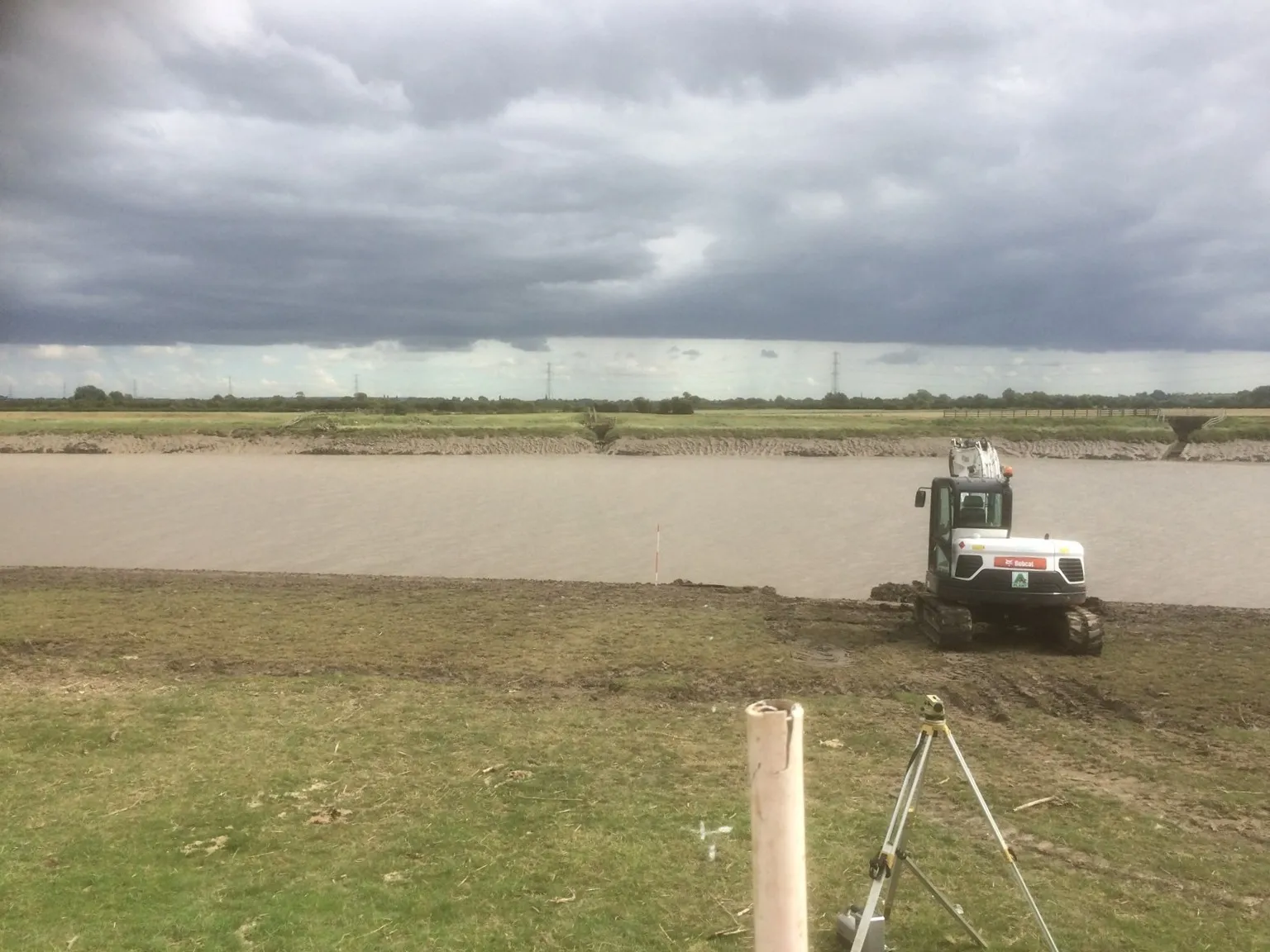
A directional-drilled pipe crossing beneath a river

Crossing Solutions · Rivers, Canals & Watercourses

River, canal and watercourse crossings

We drill pipes and ducts clean beneath rivers, estuaries and canals from a pit on each bank, with no cofferdam, dredging or in-channel works. Tidal crossings, large-diameter mains and HV ducts, through clay, rock and complex ground.

  • No in-channel works
  • Tidal & estuary crossings
  • Clay, rock & mixed ground
  • Up to 710mm mains

River crossings

Under the water, never through it

A river crossing is the textbook case for directional drilling. We steer the new pipe several metres below the riverbed, from a launch pit on one bank to a reception pit on the other, so the river, the banks and the bed are never touched. No cofferdam, no dredging, no works in the channel, which is what makes drilling the right answer on tidal, salty and protected watercourses.

We have crossed estuaries, rivers and canals across the country, from a 252m tidal crossing in Somerset to 710mm trunk mains and HV duct routes. The hard part of a river crossing is usually the ground, loose cobble and gravel in a high water table, or rock beneath the bed. We have custom solutions for both, including combining a pipe ram with directional drilling where straight drilling alone will not hold. Tell us about the crossing before assuming it cannot be done.

The standard we work to

Designed to the Environment Agency FRA3 standard

Drilling a service beneath the bed of a main river is a flood risk activity, and the Environment Agency controls it. The work falls under exemption FRA3, "a service crossing below the bed of a main river not involving an open cut technique". As long as the crossing meets the FRA3 conditions it can be registered as an exempt flood risk activity rather than needing a full environmental permit, which keeps the approvals simpler and the programme shorter. Directional drilling is what lets a crossing meet those conditions in the first place, because it passes under the bed without ever touching the channel.

To register under FRA3, the crossing has to satisfy a clear set of conditions:

  • The bore at least 1.5m below the bed for the whole length of the crossing, and held at that depth for at least 5m beyond each bank
  • The crossing within 10 degrees of perpendicular to the direction of flow
  • Launch and reception pits set back from the bank, at least 8m on a non-tidal main river and 16m on a tidal one
  • No part of the works passing through a bank, culvert, flood defence or sea defence
  • Set well back from sensitive features: at least 50m upstream of any impoundment or raised channel, and outside the buffer to protected sites (200m from SSSIs, SACs, SPAs and Ramsar sites, 100m from the highest-status rivers and lakes)
  • Excavated material kept off the floodplain, hazard markers in place, and the bed and banks left undisturbed

A main river is one shown on the Environment Agency's statutory main river map. Plenty of watercourses are ordinary watercourses rather than main rivers, and FRA3 does not strictly apply to them. We design every watercourse crossing to the FRA3 minimum regardless. It is a proven standard for keeping a crossing deep enough and square to the flow, so working to it across the board means the crossing is sound whether the channel is a main river, an ordinary watercourse or a canal.

Meeting FRA3 starts with knowing the bed. We profile the river or canal bed with a bathymetric survey, then design the bore to sit the required depth below it for the whole crossing and beyond both banks. The crossing is drawn up and the depth proven as part of our trenchless design and CAD work. Where a crossing cannot meet every exemption condition, a full flood risk activity permit is needed instead of the FRA3 exemption. That permit is normally taken out by the client, main contractor or asset owner, and we assist them with it, providing the bore design and the supporting detail the application needs, or handling the application ourselves where that suits the job.

Selected projects

River and canal crossings we've drilled

A selection of real crossings. We've also installed 175m of HV ducts under a river, drilled river crossings for wind-farm cable routes, and put gas, water, electric and telecoms across rivers for housing schemes.

Pawlett Hams, River Parrett

Parrett Drainage Board · 2017

252m · 355mm water main · tidal estuary · clay & rock

A 252m water main drilled clean under the tidal River Parrett, around 5m beneath the riverbed, restoring freshwater to a Bridgwater Bay SSSI grazing marsh. One of the longest river crossings drilled in the South West, with no works in the river.

Read the case study →

Angelinos Trunk Main river crossings

Murphy / Thames Water

710mm · 7 crossings · ~100–120m each

Seven large-diameter river crossings of 710mm pipe, welded into single strings on the bank and pulled through under the watercourse, delivered over about two months. Among the bigger river mains we have installed. We worked for Murphy as principal contractor, with Thames Water the client.

Bovey Tracey river crossings

Bridge Civil Engineering

6 river crossings · typically 80–120m

Six separate river crossings on one scheme in Devon, each steered bank to bank beneath the watercourse without touching it.

River crossings, CyrusOne data centre

Blu-3 (UK) / Yondr · 2024

2 drills · 60m & 180m · 3 × 200mm + 1 × 125mm · pipe ram + HDD

Two four-way duct crossings, 60m and 180m, on the same data-centre scheme as our M25 crossings but a few hundred metres away across the valley. The 180m bore crossed a statutory main river through some of the worst ground we have ever drilled, cobble and gravel in a high water table. On the 60m bore we rammed in a steel sleeve to get through the gravel, then carried the directional drill on from there. Designed and installed by us.

River crossing through rock, HV circuits

2020

100m · 4 × 33kV circuit ducts · through rock

A 100m river crossing drilled through rock to carry four 33kV circuits, designed and installed, putting the HV ducts safely below the watercourse.

Grand Union Canal gas main crossing

SAS Utilities

100m · 180mm · gas main

A 100m, 180mm gas main steered beneath the Grand Union Canal, keeping the navigation and the bank intact while the main was carried across underneath.

Questions answered

Questions about river crossings

Can you install a pipe under a river without disturbing it?

Yes, and it is one of the things drilling does best. We launch from a pit on one bank, steer the bore several metres below the riverbed, and receive it on the far bank, so nothing goes in the river itself. No cofferdam, no dredging, no in-channel works. At Pawlett Hams we drilled a 252m water main under a tidal estuary with the riverbed, banks and tidal flow left untouched, which is exactly what a protected watercourse needs.

Do you need an Environment Agency permit to drill under a river?

Drilling a service beneath the bed of a main river is a flood risk activity, controlled by the Environment Agency. It usually falls under exemption FRA3, a service crossing below the bed of a main river not involving an open cut technique. As long as the crossing meets the FRA3 conditions, the set depth below the bed, the angle to the flow, the pit set-backs and the clearances from defences and protected sites, it can be registered as an exempt flood risk activity rather than needing a full permit. We design the crossing to those conditions from the start so it qualifies. Where a crossing cannot meet them all, a full flood risk activity permit is needed instead. That is normally the client's, main contractor's or asset owner's to take out, and we assist them with the application and provide the supporting design, or handle it ourselves where that suits the job.

How long or large a river crossing can you drill?

Length on its own is rarely the limit. We have drilled 252m under a tidal estuary and installed 710mm mains under rivers on the Angelinos trunk-main scheme. What really decides a river crossing is the ground, the pipe diameter and the room for a launch and reception pit on each bank. Send us the survey and we will tell you honestly whether it drills in one shot or splits into shorter bores.

Can you cross a canal?

Yes. A canal crossing works the same way as a river, drilled beneath the channel from a pit each side. We have steered a 180mm gas main under the Grand Union Canal and installed duct routes under canals for grid-connection schemes, with the navigation and towpath left in use.

What about complex ground, cobble, gravel or high groundwater?

Rivers often bring the worst ground, loose cobble and gravel sitting in a high water table. On a recent data-centre scheme we drilled two four-way crossings in exactly those conditions, some of the worst ground we have ever drilled, one of them across a main river. On the shorter bore we rammed in a steel sleeve to get through the gravel and then carried the directional drill on from there, combining a pipe ram with HDD to land the crossing where straight drilling alone would not have held. We have custom-built solutions for cobble, gravel and high-water-table ground, so a difficult river crossing is worth asking us about before assuming it cannot be drilled.

Can you drill river crossings through rock?

Yes. The pilot at Pawlett Hams ran through clay and rock under the estuary, and we have drilled a 100m river crossing through rock for four 33kV circuits. We steer rock with an All Terrain dual-pipe system, or a down-the-hole air hammer in the hardest ground, rather than fluid-hungry mud motors. See our rock directional drilling page.

Got a river or watercourse to cross?

Send us your survey and levels. If your crossing can be directional drilled, under a river, an estuary or a canal, we'll tell you honestly, with the bore designed to last.