
Skip to content
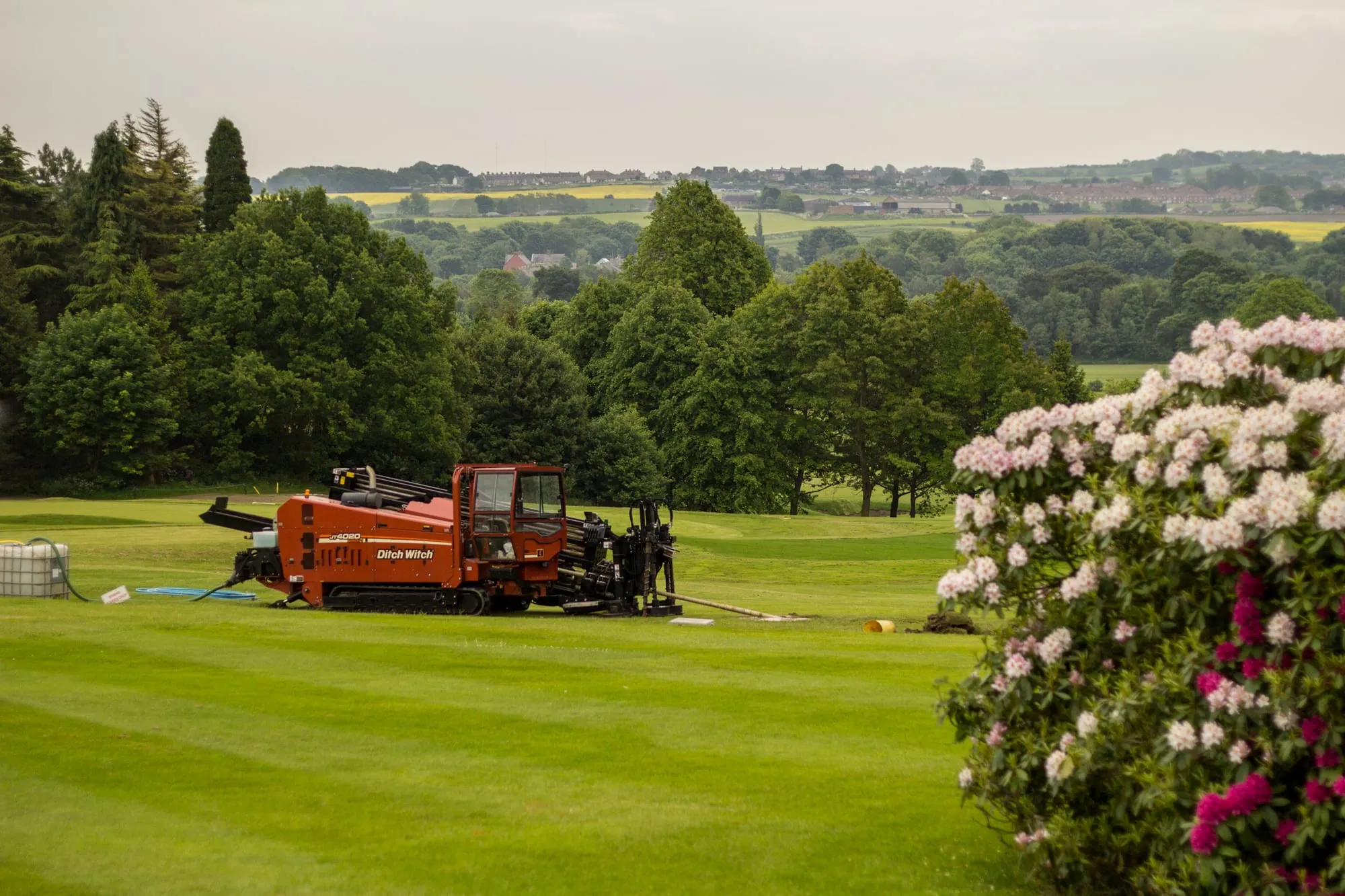
A directional drilling rig working in green parkland with minimal ground disturbance

Crossing Solutions · Environment

SSSI and environmentally sensitive crossings

On protected ground, drilling lets us pass a pipe or duct beneath the habitat from a small pit on each side, with no trench cut across it. SSSI land, grazing marsh, wetlands, protected trees and hedgerows, and wind-farm cable routes, with the surface footprint kept to a minimum.

  • SSSI & protected ground
  • Minimal surface footprint
  • No trench across habitat
  • A pit each side, nothing between

Sensitive-site crossings

Beneath the habitat, not through it

On an SSSI, a wetland or any protected habitat, an open trench is usually a non-starter. Drilling solves it by passing the pipe or duct several metres beneath the ground, launched and received from a small pit on each side, so the habitat in between is never opened up. The smaller the footprint, the easier the consent and the lighter the reinstatement.

The same goes for a single protected feature. A tree with a Tree Preservation Order, a veteran tree or an established hedgerow cannot have a trench cut through its root protection area, so we set the pits well clear of the canopy and pass the bore safely beneath the roots, leaving the tree or hedge completely untouched.

We have crossed a Bridgwater Bay SSSI grazing marsh, drilled across protected wetland for a grid connection, drained a six-million-litre lake to take away a flood risk, and put HV cable routes across areas of SSSI a client could not excavate. We will work alongside your ecologist and the consenting requirements, site the pits on already-disturbed ground where we can, and keep the whole operation as light on the land as the job allows.

Selected projects

Sensitive-site crossings we've drilled

A selection of real low-impact crossings, from SSSI grazing marsh and protected wetland to flood-alleviation drainage and wind-farm cable routes.

Pawlett Hams, Bridgwater Bay SSSI

Parrett Drainage Board · 2017

252m · 355mm water main · under a tidal estuary

A water main drilled under the tidal River Parrett to restore freshwater to 397 hectares of rare coastal grazing marsh in the Bridgwater Bay SSSI, with no works in the river or across the protected marsh, just one small pit on each bank.

Read the case study →

Mulgrave Estates lake drain

Mulgrave Estates

710mm & 630mm culverts · 6,000,000-litre lake

A collapsed culvert had dammed a valley into a lake holding six million litres of water. We first drilled a 180mm drain to drop it from 8m deep to 1m, then installed 710mm and 630mm replacement culverts, draining the lake and alleviating the flood risk.

Chessington World of Adventures

Metricab Power Engineering

14 × 2-way 33kV · 70–300m · roads, rivers & SSSI

Fourteen 33kV duct crossings, 70 to 300m long, on a 4km dual-circuit scheme, drilled across roads, rivers and areas of SSSI that were deemed impractical to excavate.

Wetland crossing, grid connection

2024

2 × 180m · 3 × 180mm · across wetland

Two 180m duct bores drilled across protected wetland for a National Grid substation upgrade, keeping the cable route below the sensitive ground rather than cutting a trench through it.

Wind-farm cable routes

CA Blackwell, Raymond Brown, McNicholas

river & land crossings · environmentally sensitive

Cable-route crossings on several wind-farm schemes, including river crossings for Raymond Brown and four-way duct river crossings for McNicholas, where trenchless was the low-impact way across the ground.

Questions answered

Questions about sensitive-site crossings

Can you install services across an SSSI or protected ground?

Yes, and it is often the only acceptable way. Drilling lets us pass a pipe or duct beneath the protected habitat from a small pit each side, with no trench cut across it. At Pawlett Hams we crossed a Bridgwater Bay SSSI grazing marsh with nothing more than a pit on each bank, and at Chessington we crossed areas of SSSI a client could not excavate. We will work with your ecologist and the consents to keep the surface footprint to the absolute minimum.

How do you protect habitat, trees and ground during the work?

The whole point of trenchless on a sensitive site is the small footprint. Instead of an open trench across the habitat, there is one launch pit and one reception pit, sited on already-disturbed ground wherever possible, and the bore passes safely below everything in between, the roots of TPO trees, protected hedgerows, watercourses, marsh and ditches included. Less ground opened up means less reinstatement, less disturbance and a far easier conversation with the regulator.

Can you drill beneath protected trees and hedgerows?

Yes, and it is one of the most common reasons we are called in. A tree with a Tree Preservation Order, a veteran tree or a protected hedgerow cannot have a trench cut through its root protection area, so we set the bore deep enough to pass safely beneath the roots and launch and receive it well clear of the canopy. The tree or hedge is left completely undisturbed. We did exactly this on the Iron Acton grid connection, drilling beneath a tree-protected hedgerow rather than opening it up.

What surface footprint does drilling leave?

Typically just two pits, one to launch and one to receive, plus a working area for the rig. Everything between them is left as it is. On the kind of protected marsh, wetland and parkland we have worked on, that small footprint is the difference between a scheme being consentable and not.

Do you work in wetlands and marsh?

Yes. We have drilled across protected wetland for a grid connection and worked the soft ground of a Somerset grazing marsh between the tides. Soft, wet and low-lying ground brings its own challenges for setting out and supporting the rig, which is exactly the sort of thing we plan for up front rather than discover on site.

Can you drain or alleviate flooding without trenching?

Yes. At Mulgrave Estates a collapsed culvert had formed a lake of six million litres. We drilled a drain in to bring the level down safely, then installed large replacement culverts trenchlessly, draining the lake and taking the flood risk away without excavating the valley. Flood-alleviation drainage to falls is something we do regularly, see our trenchless drainage page.

Got a crossing on protected ground?

Send us the constraints and the ecology. We'll plan the smallest-footprint crossing we can, work with your consents, and tell you honestly whether it can be drilled.