Est. 2005 · UK-wide trenchless installations07920 553 578·enquiries@swdirectionaldrilling.co.uk
Case Study · Gravity Drainage
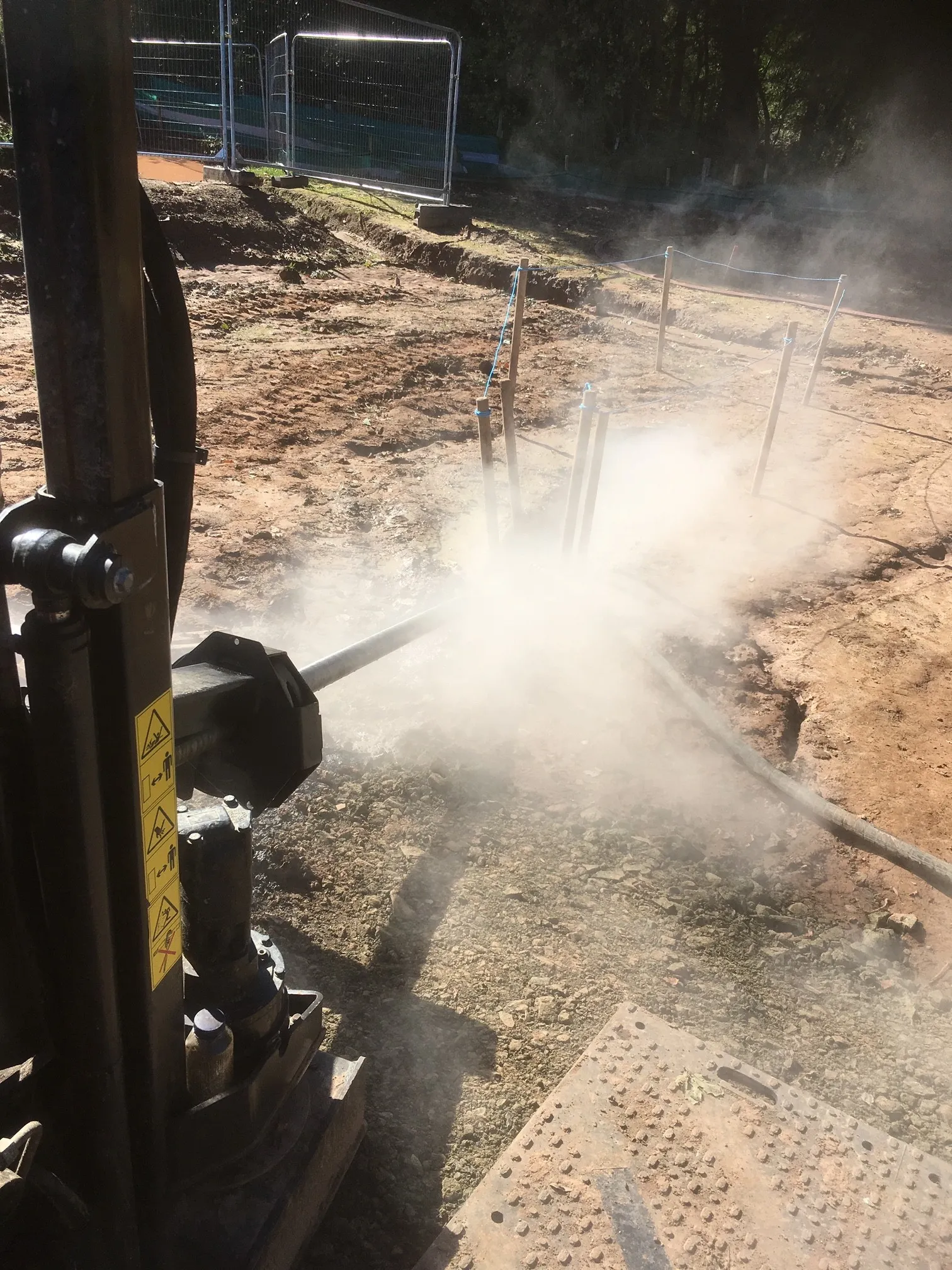
On a former ironworks at Hopton, we directional-drilled a 900mm gravity outfall down a steep, wooded valley side to the brook, the crossing the design team had expected to tunnel. Drilling it instead saved the client around £1 million.
The job
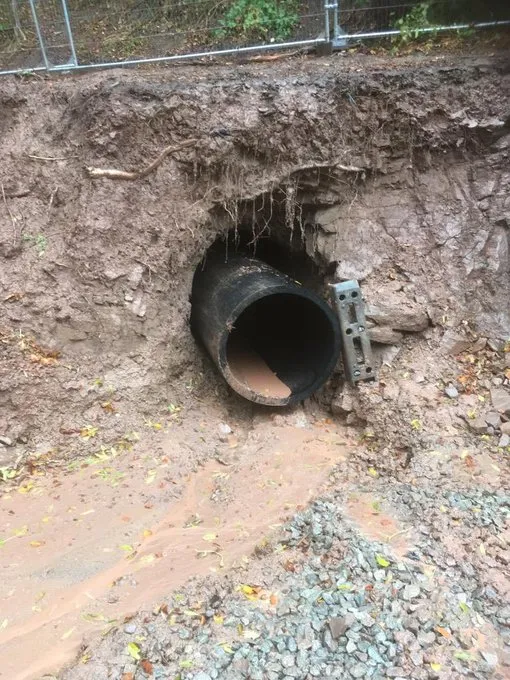
Severn Trent needed a new 900mm gravity drainage outfall installed for principal contractor Barhale/NMC at Hopton. The line ran down a steep, heavily wooded valley side (mature oak and ash the whole way) to discharge near Hopton Brook.
Open-cut was a non-starter. A deep trench for a 900mm pipe down that slope, through the trees and rock, would have been hugely disruptive and expensive. So the scheme had been priced to betunnelled or auger bored. We were brought in to look at whether it could be directional drilled instead.
Two things made it hard. The ground was largely “strong” rock. And because gravity drainage has to run to falls (a continuous, designed gradient, not just “from A to B”), the bore had to be steered to an exact profile the whole way down to the outfall.
Project at a glance
| Client | Severn Trent |
|---|---|
| Principal contractor | Barhale / NMC |
| Location | Hopton, near Kidderminster (DY14), a former ironworks site beside Hopton Brook |
| Scope | 900mm O.D SDR 17 gravity drainage outfall, drilled to falls |
| Pipe | 900mm O.D SDR 17 HDPE, supplied, butt-fusion welded and de-beaded |
| Method | Horizontal directional drilling through rock, in place of the proposed tunnel / auger bore |
| Fall | Pipe invert dropped about 15m over the ~100m run, following a ~22m fall in ground level to the watercourse |
| Bore | Curved bore reamed to 1175mm, launch / drive / reception pits |
| Rig | Ditch Witch JT60 (All Terrain rock system) |
| Ground | Largely “strong” rock, plus buried iron, steel cable and bar from the old works |
| Programme | About 3 weeks on site |
| Outcome | Delivered within 10% of the quoted cost despite hidden steel, with ~£1m saved vs tunnelling |
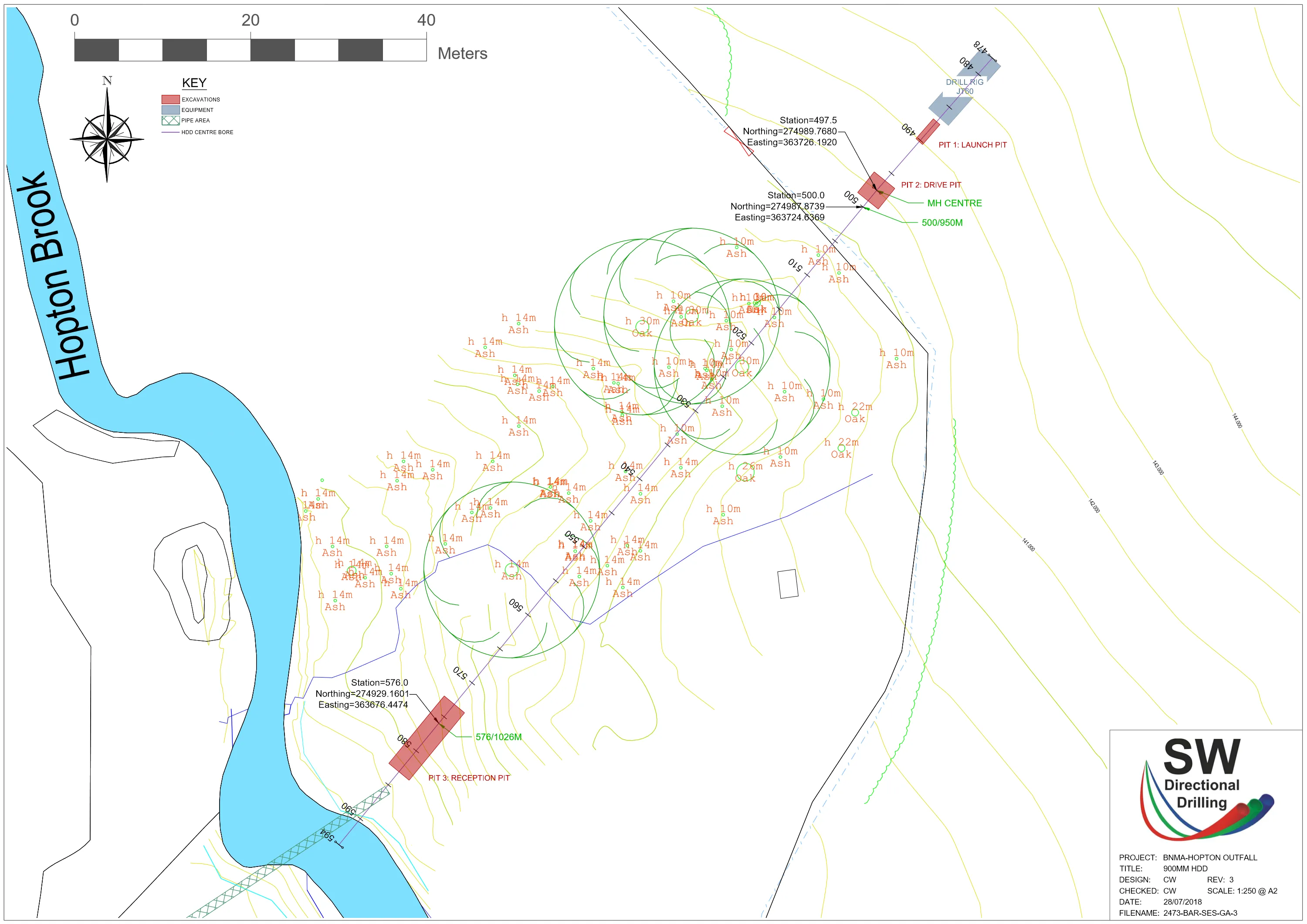
Our REV 3 general arrangement, designed and checked in-house.
The solution
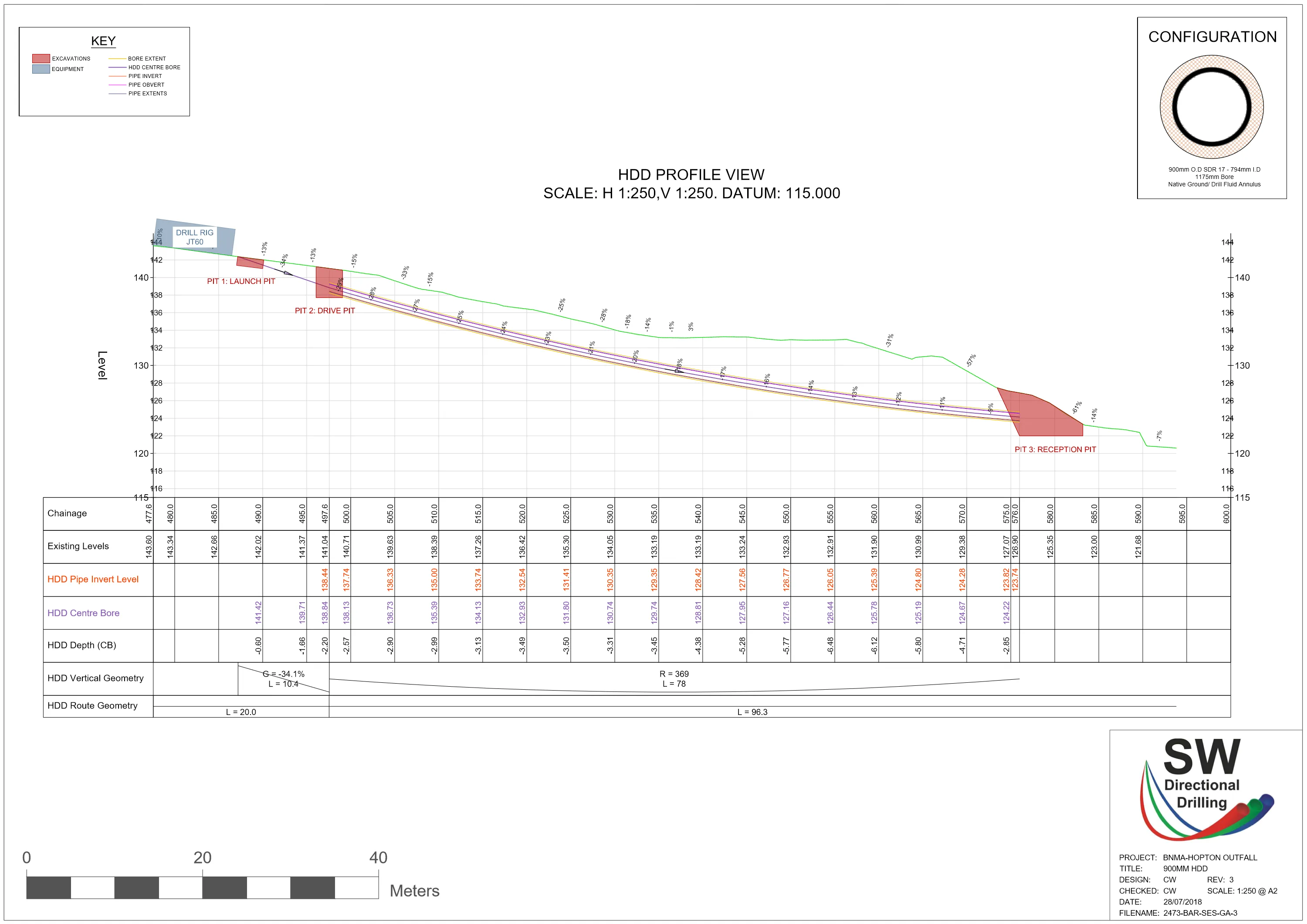
The key was a designed curve in the bore. The pipe invert had to drop about 15 metres over the roughly 100-metre run, following a fall in ground level of some 22 metres down to the watercourse. Left as a single steep, straight grade pointing down the hill, it would have been very difficult to pull a 900mm pipe in. By easing the profile through a curve we made the crossing drillable and pullable, so we could install it by HDD rather than tunnel it.
And that is where the money was saved. It was not the curve itself that saved the £1 million; it was being able to drill the outfall at all instead of tunnelling it. Tunnelling or auger boring down that slope would have meant far more groundwork, far more time and far more cost. Directional drilling took all of that out of the job. We drilled it to falls, reamed the bore to 1175mm and pulled in the 900mm SDR 17 pipe with a Ditch Witch JT60 All Terrain rock rig.
The pipe was ours to deliver too. We supplied the 900mm HDPE, butt-fusion welded it into one continuous string on site and de-beaded it, taking the internal weld bead back out of each joint so the finished outfall runs clean and holds its bore for the life of the asset.
The complication
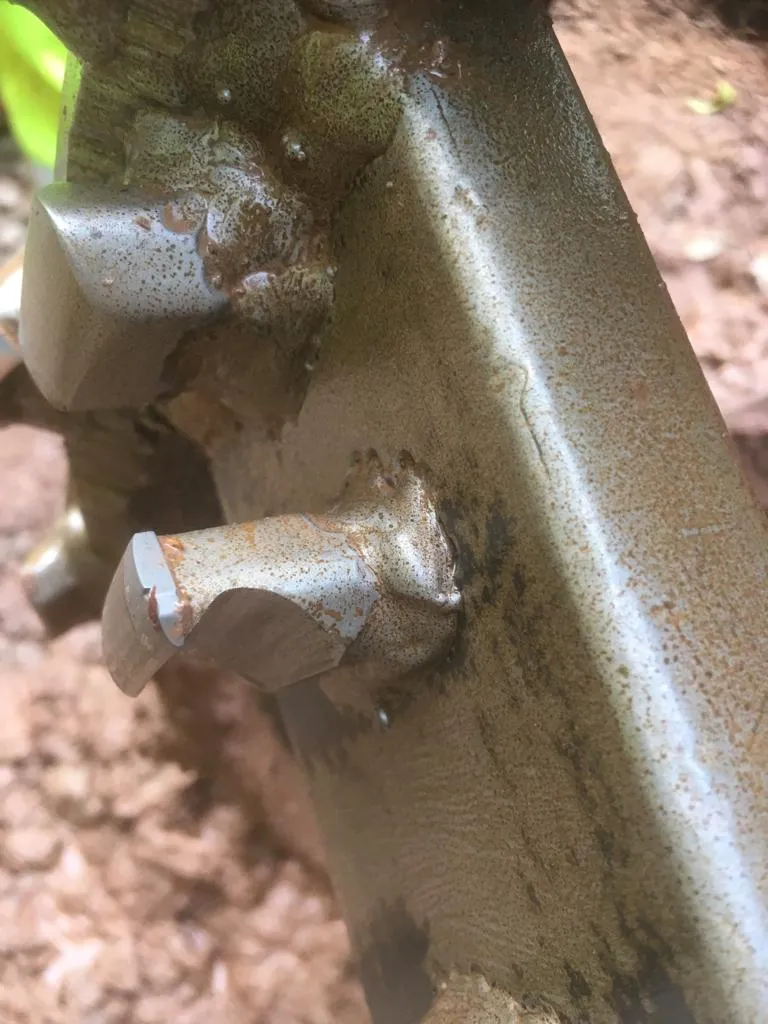
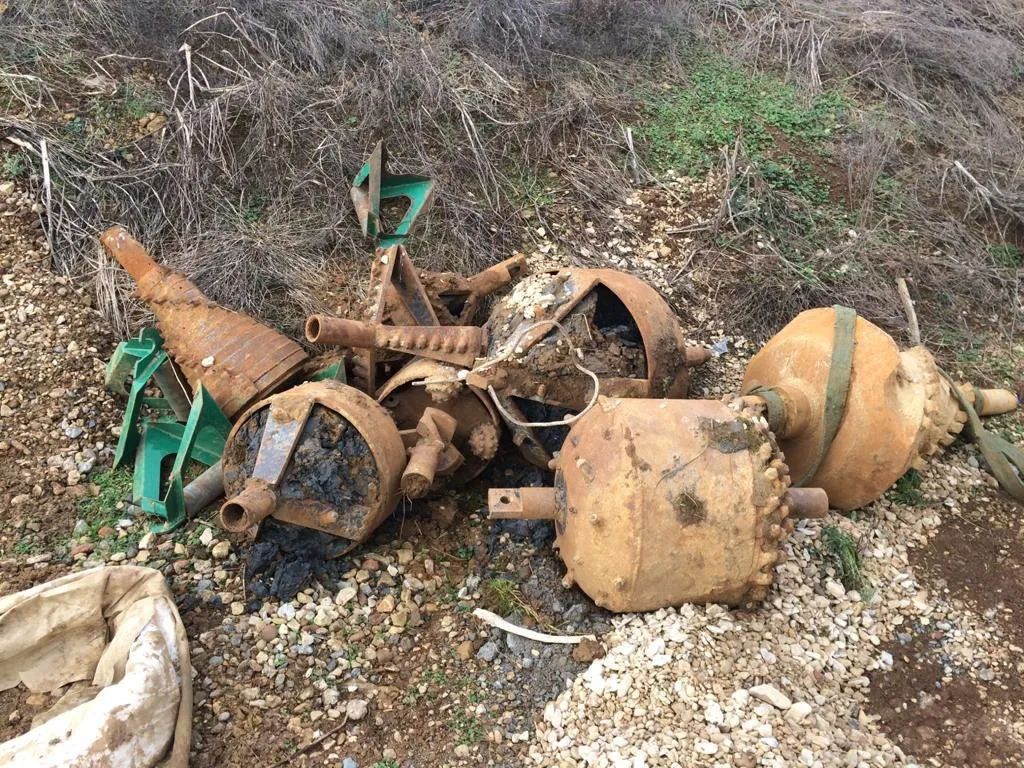
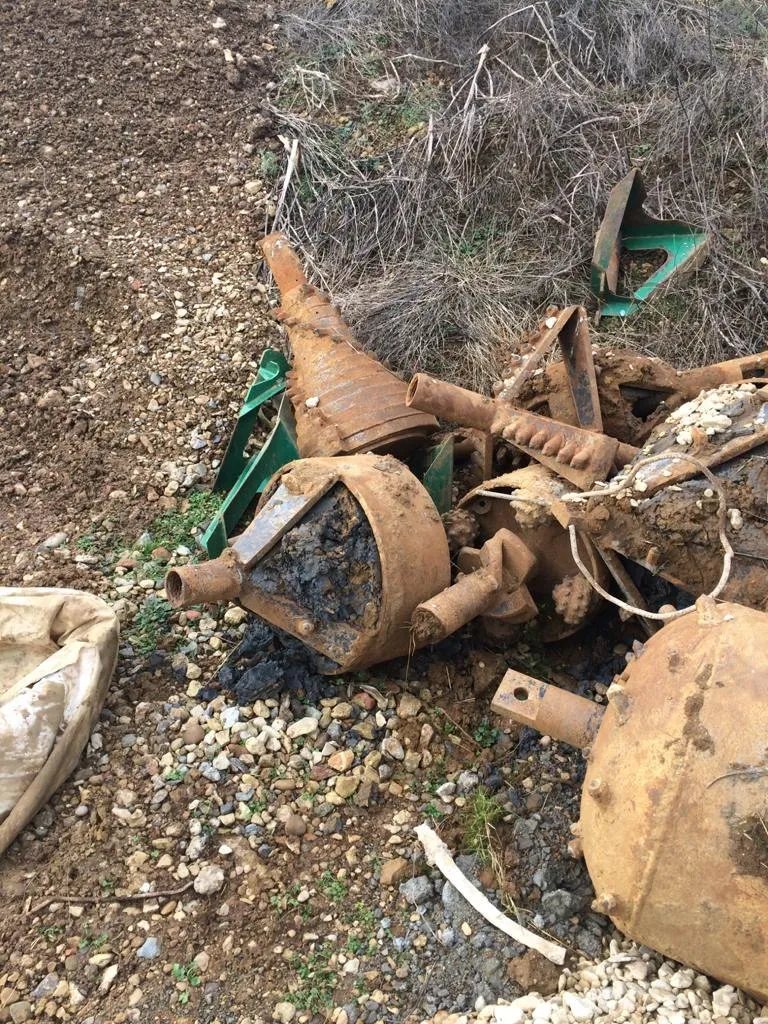
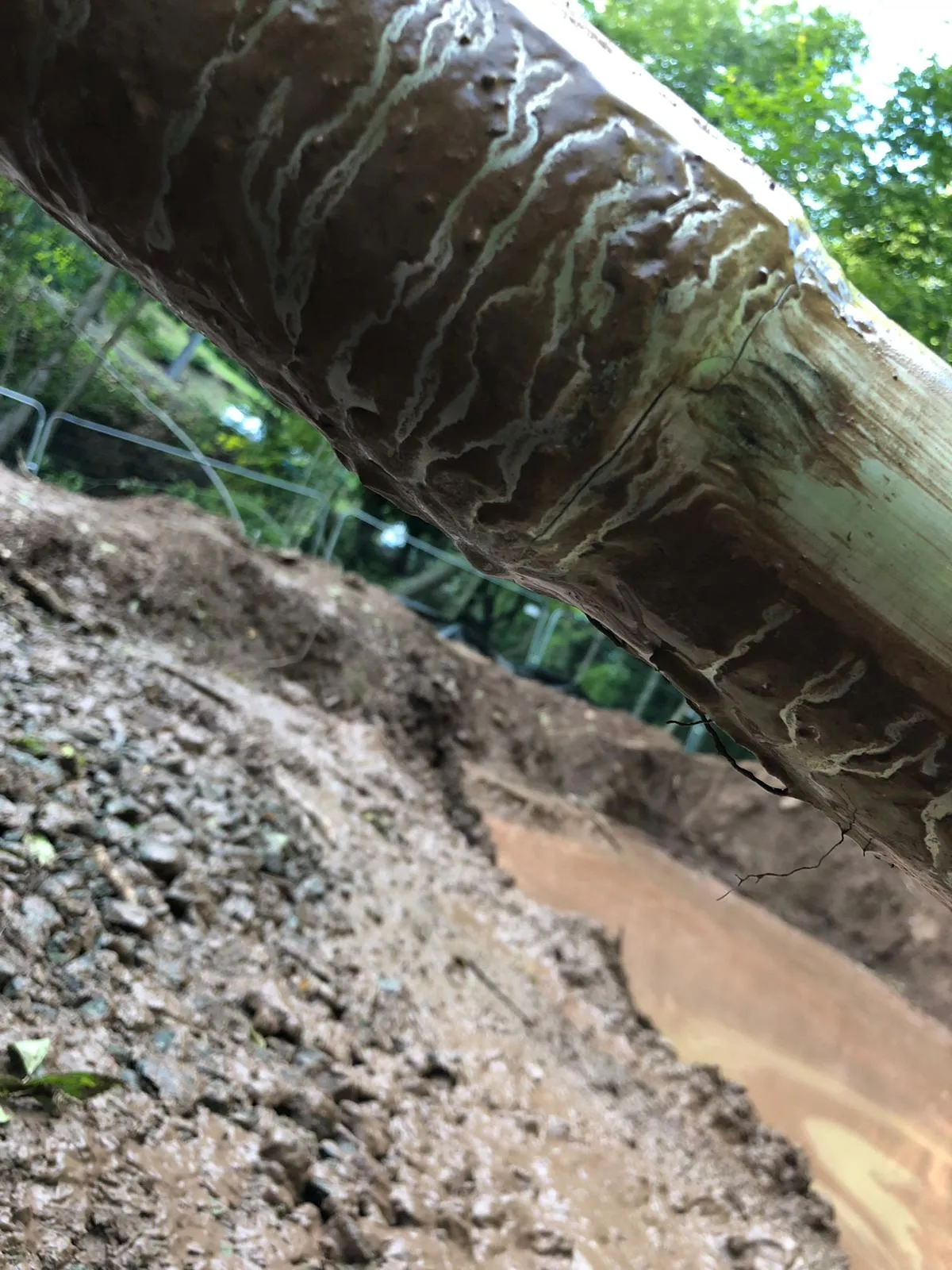
Hopton had been an ironworks, and the ground had not forgotten it. Partway through the bore we started hitting what the site history hadn't fully warned us about. Buried iron, steel cable and steel bar left in the ground from the works. Steel is about the worst thing to meet with rock tooling. It wears cutters down and chews up a reamer.
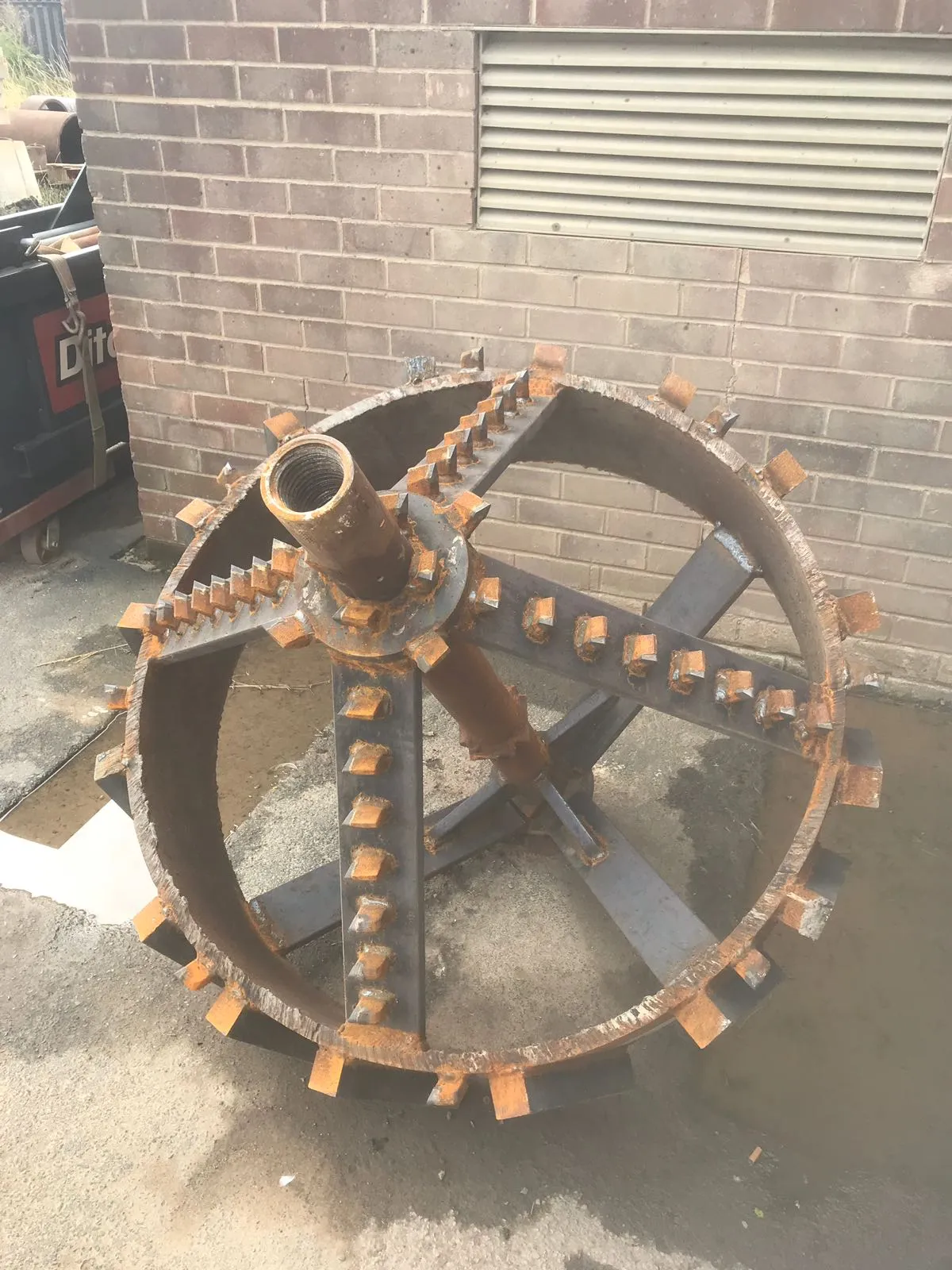
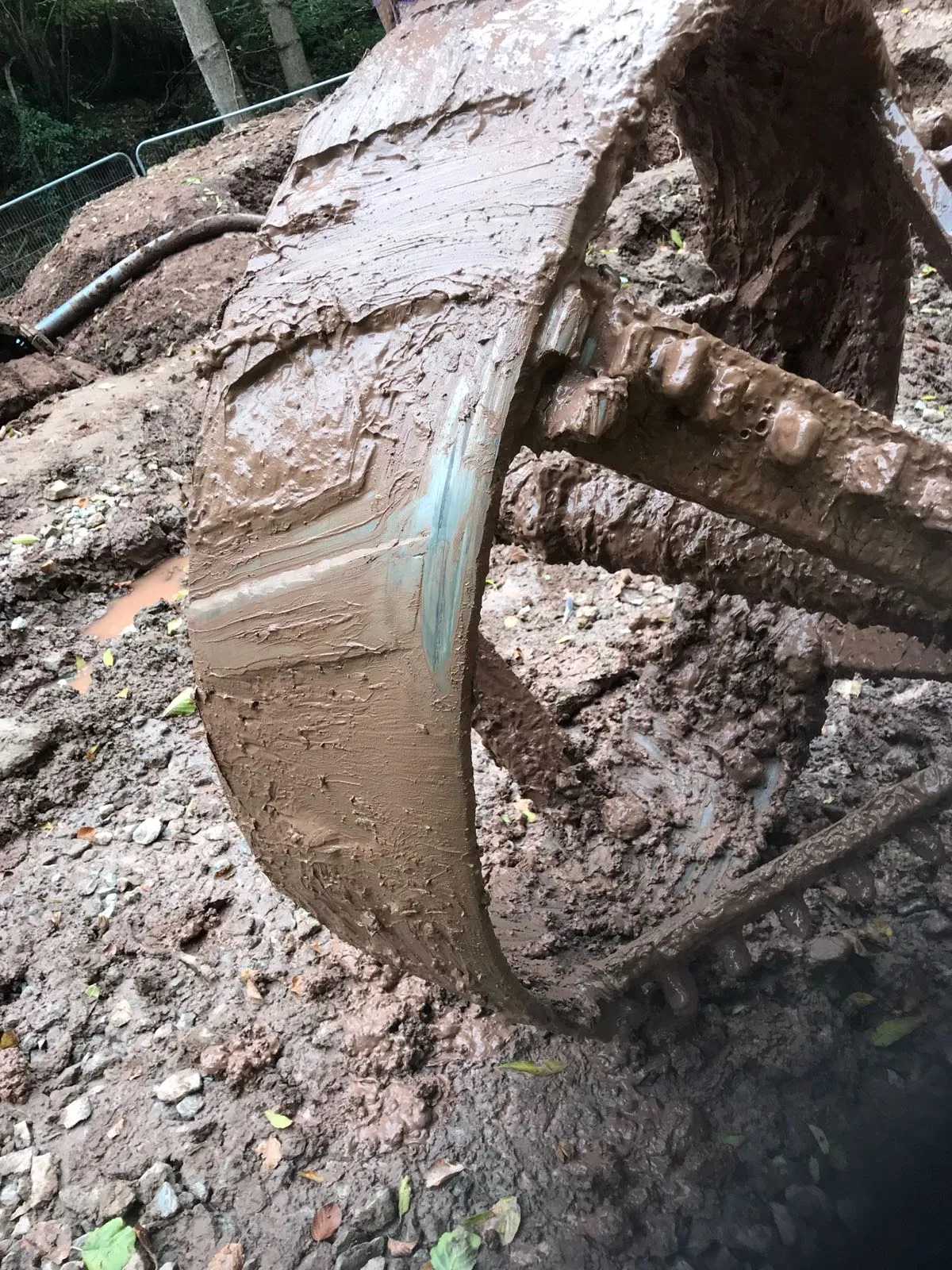
There was no clean way around it. It was simply a case of adapting the tooling and throwing more tooling at it until the bore was through. For one of the final passes we built a custom winged reamer in-house that cut both forwards and backwards and let spoil through the middle, an unconventional choice, specifically so it wouldn't lock up on the metal in the bore. It worked perfectly. Twenty years of building and modifying our own drilling kit is exactly what lets us keep going when a job turns like this, rather than standing the rig down to wait on parts.
We inspected the gear constantly, too. We check our equipment as a matter of course, but on a job like this we were checking everything, all the time. Catching something like a cracked drill rod early, before it lets go downhole, is the difference between finishing the bore and abandoning it.
Despite the hidden steel and the damage it did, we brought the job in within 10% of the quoted price and off site in about three weeks.
On site
The outcome
A 900mm gravity outfall delivered to its designed fall, through strong rock and a buried ironworks, by directional drilling instead of a tunnel, on programme in about three weeks and within 10% of the quoted cost. It is the clearest example we have of why it pays to ask whether a crossing can be drilled before it is priced to be tunnelled.
Questions answered
Yes. At Hopton we installed a 900mm outer-diameter SDR 17 gravity outfall by directional drilling, drilled to falls, where the original proposal was to tunnel or auger bore it. Large-diameter gravity drainage is one of the things we specialise in. The bore is steered to a designed gradient so the finished pipe holds its fall the whole way. See our trenchless drainage service for how we do it.
At Hopton the saving came from being able to drill the crossing at all rather than tunnel it. Tunnelling or auger boring the outfall down a steep, wooded valley side to the brook would have meant far more groundwork, shafts and time. A designed curve in the bore made directional drilling possible and let us pull the 900mm pipe in, which avoided the tunnel altogether and took the cost out of the job.
Yes. The Hopton ground was largely strong rock, and being a former ironworks it also hid iron, steel cable and bar that we only found once we were partway through. We drilled it with a Ditch Witch All Terrain rock system and, when the steel started damaging tooling, adapted and added tooling to push the bore through. We still finished within 10% of the quoted price. See rock directional drilling for more.
Related services
Large-diameter gravity drainage and outfalls drilled to falls, up to 900mm.
View service →Steering a bore through strong rock with dedicated tooling, as at Hopton.
View service →The core steered method behind the Hopton outfall and our other crossings.
View service →Send us your drawings and levels. If it can be directional drilled instead (through rock, to falls, or around obstructions), we'll tell you honestly, and what it should save.